

The Dispatch Edition #9: Amazonian Queens, Fast Cars & Country Fairs
Week beginning July 28, 2025



Welcome to Edition #9 of The Dispatch.
If this is your first email from us, The Dispatch is our free email roundup of long-form pieces, previews, interviews, pictures and more published on Unseen Histories; curated in one place for you to read at your leisure.
The migration of our entire four year catalogue over to Substack (see our announcement) continues, but we’re nearly there. You can read previous editions of The Dispatch in our archive, here.
Many thanks for reading,
– Jordan Acosta, Creative Director, Unseen Histories

Headlines
The latest from Unseen Histories –

Interviews / Art
In Search of Gertrude Stein with Francesca Wade
Francesca Wade tells us all about her new book, Gertrude Stein: An Afterlife
Gertrude Stein was a writer, art collector, avant-gardist and a free-thinker. Today her significance as a twentieth-century cultural figure is acknowledged by all, but there remains something mercurial about her character.
For the past few years Francesca Wade has been researching Stein's life. In her new book, Gertrude Stein: An Afterlife, she reflects on her creative output and considers her intensions.
Questions by Hannah Wuensche.

Features / Antiquity
Penthesilea the Amazonian Queen
Christine Lehnen considers the gaps in our cultural memory
Over the past few years scholars have uncovered stirring new evidence about the existence of fierce warrior women who lived in Scythia in the Ancient World.
These women bear a resemblance to Penthesilea, the mythical Amazonian queen in Greek mythology. It might be, some claim, there is a link between the two. The myth may well be grounded in factural accounts.
Scholarship, however, is only part of it. As Christine Lehnen, the author of Remembering Women, explains here, what we choose to believe is a different matter altogether.

Interviews / Vietnam
The Cleaving: Vietnamese Writers in the Diaspora with Isabelle Pelaud
Isabelle Pelaud introduces a unique literary project
Fifty years after the end of a ruinous war a new generation of confident and assertive Vietnamese writers are reclaiming their histories.
In The Cleaving, a compilation of dialogues between Vietnamese diaspora writers, ideas like trauma, displacement, memory and belonging are investigated.
Uniting these dialogues, as the editor Isabelle Pelaud explains in this interview, is a determination to challenge lazy narratives and to bring to the centre an authentic, inspiring voice.
Bookshelf
Previews, excerpts, and more from the very best published history books –

Book Previews
New History Books for Summer 2025
From Mary Queen of Scots to Fidel Castro, the Monsoon to earthquakes, here is a selection of anticipated new history books released over the summer ahead. Previews by Louis D. Hall.
Unseen Histories relies on your patronage to operate. You can support us by purchasing a book via the links, from which we will receive a small commission. Thank you for your support.
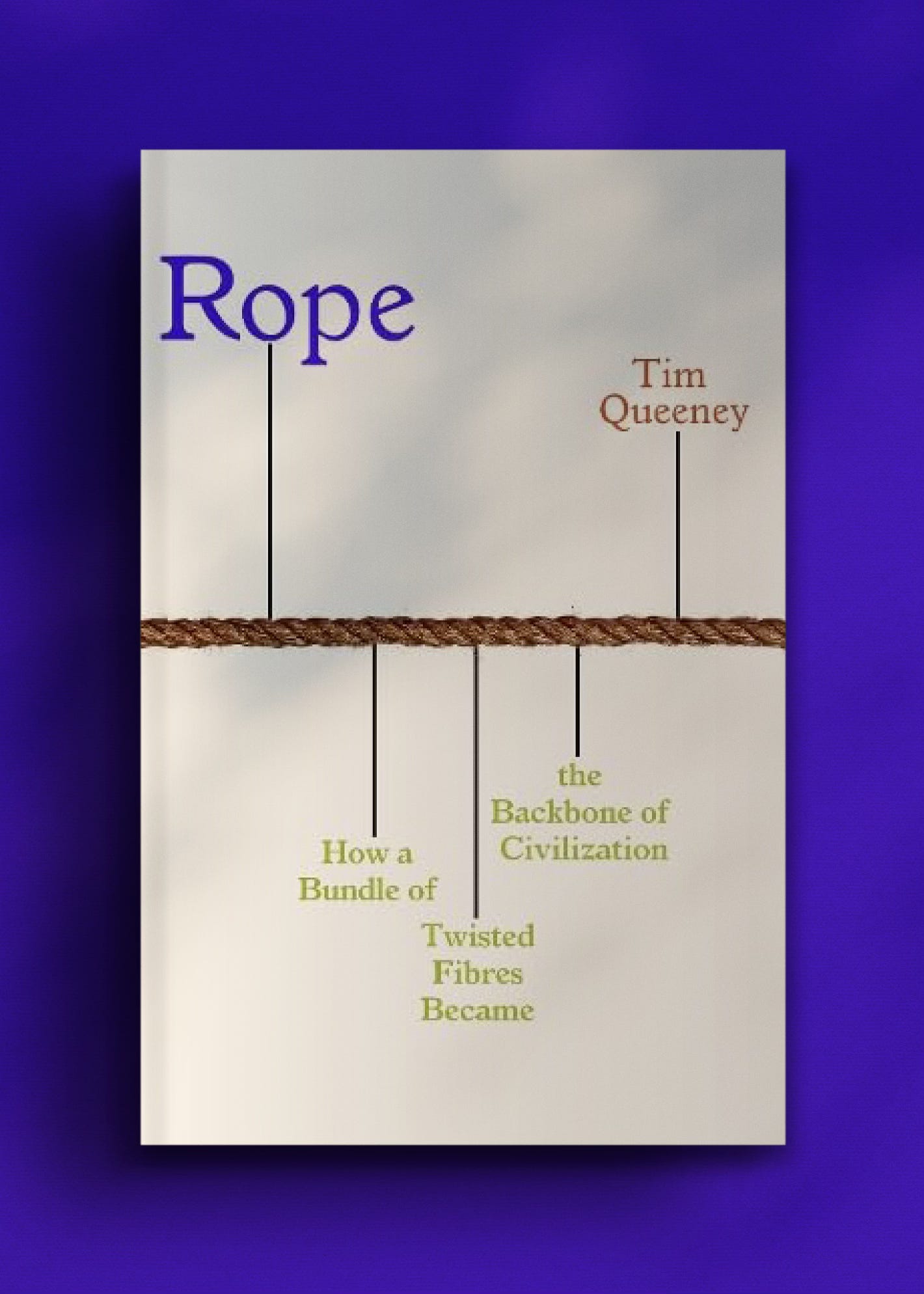
Jordan’s Pick: Rope: How a Bundle of Twisted Fibres Became the Backbone of Civilisation by Tim Queeney (Icon Books) –
From Victoria Finlay’s Fabric to Susan Denham Wade’s A History of Seeing in Eleven Inventions, I’ve always been fascinated by the complete history of a single artefact or technology, as it’s such a magnificent lens in which to view the world around us.

Excerpts / Technology
The Race to the Future
Kassia St Clair on the adventure that accelerated the twentieth century
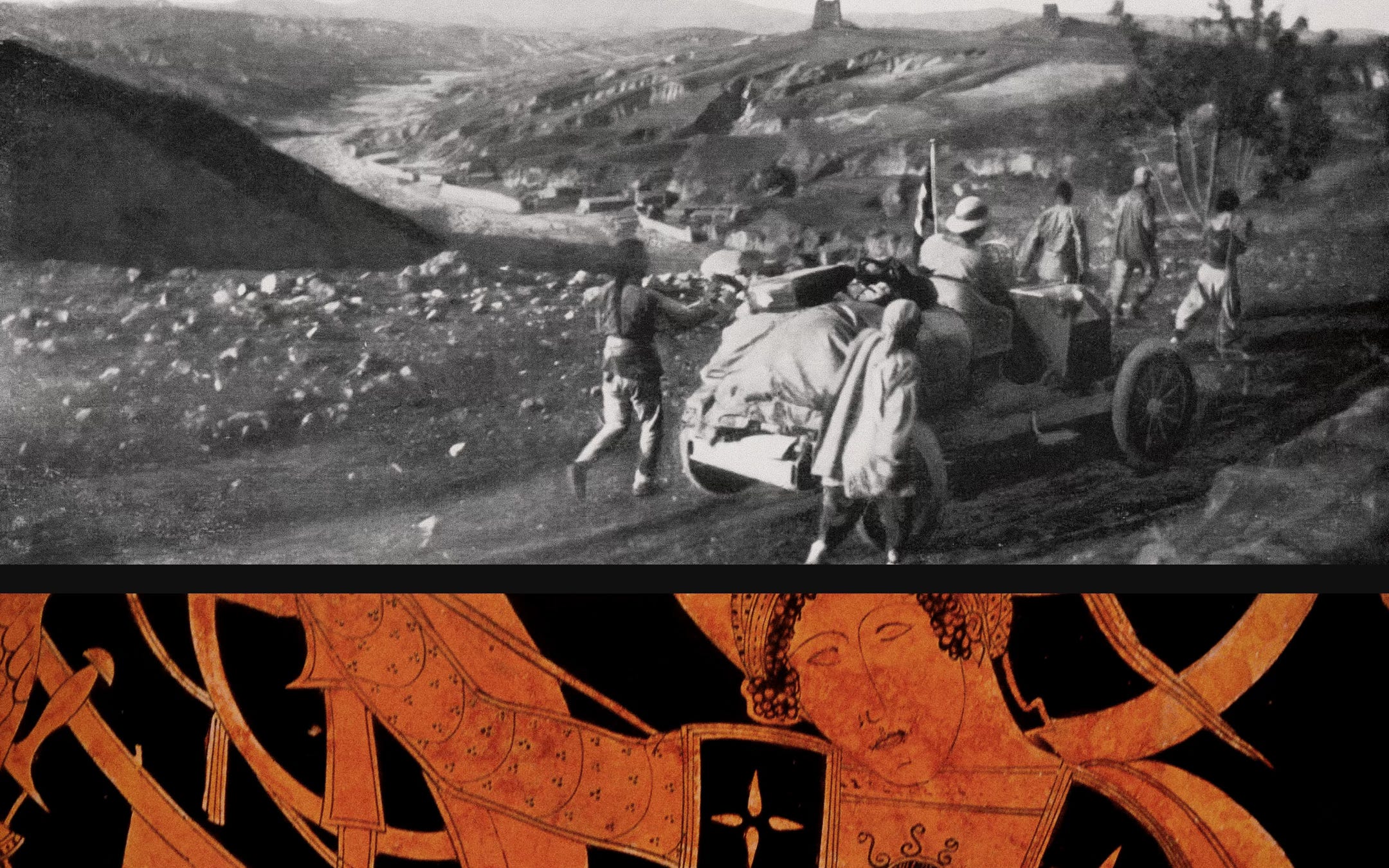
The first decade of the twentieth century was a time of ambition and expansion. It was the age of empires and the age of science. In 1907 all of these forces coalesced to create a wholly new kind of competition: the Peking to Paris race.
Five different cars entered the 'Peking to Paris'. Once underway they sought to make their way across the greatest landmass on Earth. In The Race to the Future: The Adventure That Accelerated the Twentieth Century, bestselling writer Kassia St Clair takes us back to this singular competition.
As she explains in this excerpted preface from her book, the race was more than just a race. It was a ‘decisive moment’ that confirmed the place of the automobile in modern society.
Back Page
Stories from the Unseen Histories’ archives –

Viewfinder / Americana
Greene County Fair, 1941
Hidden gems from the public archives of America
Lurking within the Library of Congress is a colossal collection of photographs documenting the United States in all its diversity, providing us with a glimpse into 20th century American life.
In October 1941, FSA photographer Jack Delano found himself taking pictures at the Greene County Fair in Georgia, spending the day capturing working class families having a fun day out.
Jordan’s Pick –
I spend a lot of time rooting around the public archives, and it’s amazing how much of ordinary life was recorded, then promptly shelved for decades. Here, Ukrainian-born photographer Jack Delano captures a familiar sight, that of a travelling fun fair. I loved restoring this set of photograph, and I imagine what it must’ve been like to accompany Delano as his captured a fun day out for working class families.
Op-ed
More from around the web –
High-minded exhortations aside, the making of art out of war must also be, by necessity, a propaganda mission, to justify the effort and expense. The World War II combat artists would, implicitly, reveal the bravery, heroism, and resilience of “our boys.” Though a photograph might simply show a slaughter—as Mathew Brady’s Civil War work famously did—a painting could soften the raw carnage, allude to epic themes, and offer meaning and solace in the face of inestimable loss.
– Katherine Jamieson, Slate. No Medals This Time: How my great-uncle, Mitchell Jamieson, depicted war in art, from D-Day to Vietnam.
"You have two regions developing the first writing systems, so archaeologists believe that they were in contact and exchanging ideas. Now we have the evidence that they were.
"We hope that future DNA samples from ancient Egypt can expand on when precisely this movement from West Asia started and its extent."
The man was buried in a ceramic pot in a tomb cut into the hillside. His burial took place before artificial mummification was standard practice, which may have helped to preserve his DNA.
By investigating chemicals in his teeth, the research team were able to discern what he ate, and from that, determined that he had probably grown up in Egypt.
– Pallab Ghosh, BBC. Ancient Egyptian history may be rewritten by DNA bone test
Pickford is fascinated by the era of early colonial expansion and also, to be frank, by treasure. “There are millions of shipwrecks going back millennia, obviously. From an archeological point of view, I suppose they’re all of interest,” he told me. “From a treasure-hunting point of view, about naught point naught one of them are of interest.” Pickford nicknamed the unknown wreck Deep Pots and, without anybody ever formally asking him to, he set out to identify the vessel.
Pickford is the purveyor of a singular sort of information. In the course of fifty years, his research has led to the discovery of dozens of shipwrecks, containing more than two hundred million dollars’ worth of recovered cargoes.
– Sam Knight, The New Yorker. The Shipwreck Detective
Thanks for reading The Dispatch.
Edition #10 will be published week beginning August 25, 2025.
Read previous editions in our archive.
Subscribe to Unseen Histories for the very best new history books, read author interviews and long-form pieces by the world’s leading historians.
